| BILLING NEWS |
 |
|
Did you know that your insurance's web site & “provider services” departments offer a The web addresses, and phone numbers for your insurance are conveniently located on your insurance card. Some of the information you can reference on these informative web sites are: These web sites can also help you check if "Prior Authorizations " As always, Las Vegas Dermatology's |
|
Thank you for showing your confidence in us through the referral of your friends! |
| Quick Links |
|
Follow Us and/or Like Us on FaceBook and Twitter for Exclusive Offers and up to date LV Derm news!
|




Hello !
Congratulations
to Dr. H.L. Greenberg for being voted
Top Doc 2013
Las Vegas Life Magazine
for the second year in a row
by your peers & patients!
Also for sharing your knowledge
with the community via HealthTap.com!
Las Vegas Dermatology
is honored to announce:
"Dr. Greenberg has been selected as the NV state representative for the American Society for Dermatologic Surgery's patient advocacy organization SANDS"
Dr. Vegas' Monthly Blog:
Dermatology Notes from Dr. H.L. Greenberg
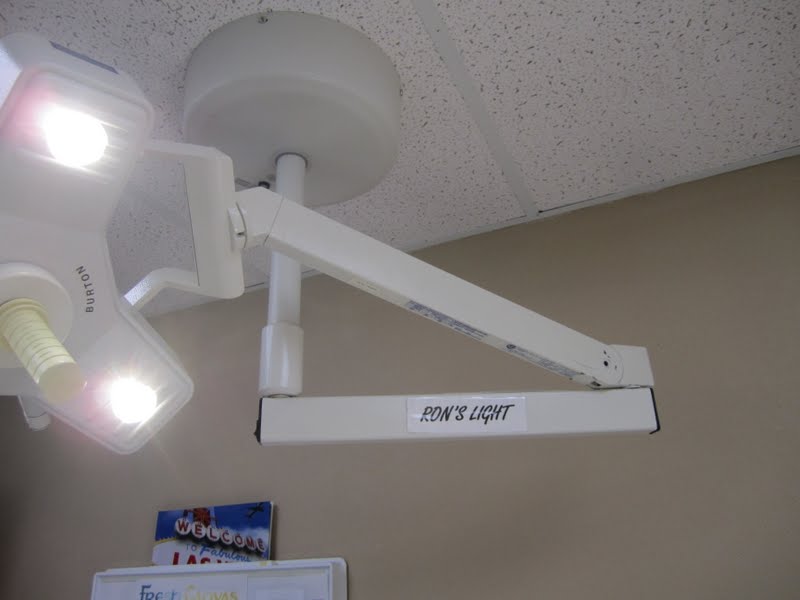
“Ron’s Light”
As a beach boy in Hawaii, Ron spent countless hours in the warm, magnificent sun walking along the beach. With Ron’s normally fair complexion hidden by an impressive deep dark tan nearly year-round for more than 20 years, Ron was a fixture on the beaches of Waikiki. It wasn’t uncommon for Ron to receive a letter addressed to “Ron on the Beach at Waikiki,” as he was always at the beach, and still remains, a lover of adventure and the outdoors. Sadly, Ron is now paying for his years of sun worshipping, having had no less than 7 skin cancers over the 4 years we have known one another.
One of the first times I treated Ron, I was very excited about a new surgical light that I had just purchased to see better during surgery. Ron asked, “So Doc, have I had enough surgeries now to pay for that fancy new exam light of yours?” I responded that he had. “Would you like for me to name the light after you?” I asked. “Why yes, I would,” Ron said, as I inquired about what we should call the light. “How’s about ‘Ron’s Light’?” Ron replied. I agreed that it sounded great.
Ron will be the first one to tell you that sunscreen and sun protection can help prevent skin cancer–something he wishes he had taken more seriously with his countless hours spent in the Hawaiian sun. With May being Skin Cancer Awareness month, just knowing that the sun can cause skin cancer is part of the battle; safe sun practices are another piece of that puzzle. Applying sunscreen prior to going out into the sun (2 ounces to the entire body), and reapplying every couple of hours is crucial. Skin examinations help to tie it all together and give you peace of mind, so if you have a suspicious lesion, call our office to schedule an appointment.
Before he left our last visit, Ron asked, “Hey Doc, do you need any other furniture?” I replied, “Not yet, Ron, but I’m keeping my eyes on you for the move into our new Summerlin medical office space in July.”
Aesthetic News from LV Derm:
How important is wearing sunscreen daily? How often should I reapply my sunscreen? Does SPF matter that much?
These are all questions we hear quite frequently at Las Vegas Dermatology. In honor of Skin Cancer Awareness Month we will focus on giving you, “all the answers”.
First, facts:
- 93% of all external aging is caused by sun exposure.
- UV rays can penetrate through windows in your home, car or office. So even if you’re inside all day you may still be receiving sun damage.
- There are three different types of UV rays:
- UVA; about 99% of all UV exposure is UVA, causing photo aging and skin cancer.
- UVB; only 1% of UV exposure is UVB which are rays that cause burning.
- UVC; this is the most dangerous of all UV exposure. Luckily, as of now, these rays are only prevalent in central Australia.
- Just one sunburn before age 18 will give you a 50% chance of skin cancer by age 60; five sunburns will give you an 80% chance.
Have you ever asked yourself, “What sunscreen is right for me?” It’s not a bad question to ask considering there are hundreds on the market with different SPF and formulations. There are two main types of sunscreen: chemical and physical. Physical blocks are comprised of two main ingredients; titanium dioxide and zinc oxide. These are both forms of a crushed mineral and can sometimes leave a white film on the skin, although newer forms are micronized and will blend in easier. A physical block is a true sun block; it will literally deflect the damaging rays from penetrating your skin. Chemical sunscreens are comprised of a variety of different ingredients to help diffuse the sun’s rays once they have already penetrated the skin. Chemical sunscreens are most often found in oil free formulas and blend into the skin without any film or shine. You must wait 30 minutes after applying these sunscreens for the ingredients to activate and be effective.
There is no such thing as 100% sun protection. An SPF 15 will protect you from about 93% of UV damage; an SPF 30 will protect you from about 96% of the sun’s rays. The highest SPF recognized by the FDA is SPF 50 which will give you around 98-99% protection from the sun, anything higher will give you about the same result. If you will be exposed to the sun in outdoor activities you must reapply your sun protection every two hours. Studies show that those who reapply their sunscreen every 2 ½ hours are twice as likely to burn than those who reapply every 2 hours. A full shot glass of sunscreen (2 oz.) is what you need to cover your entire body.
Make sure that whatever sunscreen you use is broad spectrum, meaning protection from UVA and UVB rays. Las Vegas Dermatology carries a wide range of different SPF products for all skin types and all of our sunscreens are FDA approved and medical grade to provide only the best protection. We always provide complimentary product consultations to custom match the perfect products for your skin.
This Month at LV Derm:
In Observance of Skin Cancer Awareness Month,
Protect Yourself with...
Buy 1 Sunscreen and
Get the Second Sunscreen at 50% OFF
Book your appointment on a Friday and enjoy 10% OFF your injectable service!
Have a Healthier and More Beautiful Day!
Las Vegas Dermatology®
ph: 702-456-3120 - email: frontoffice@lvderm.com